

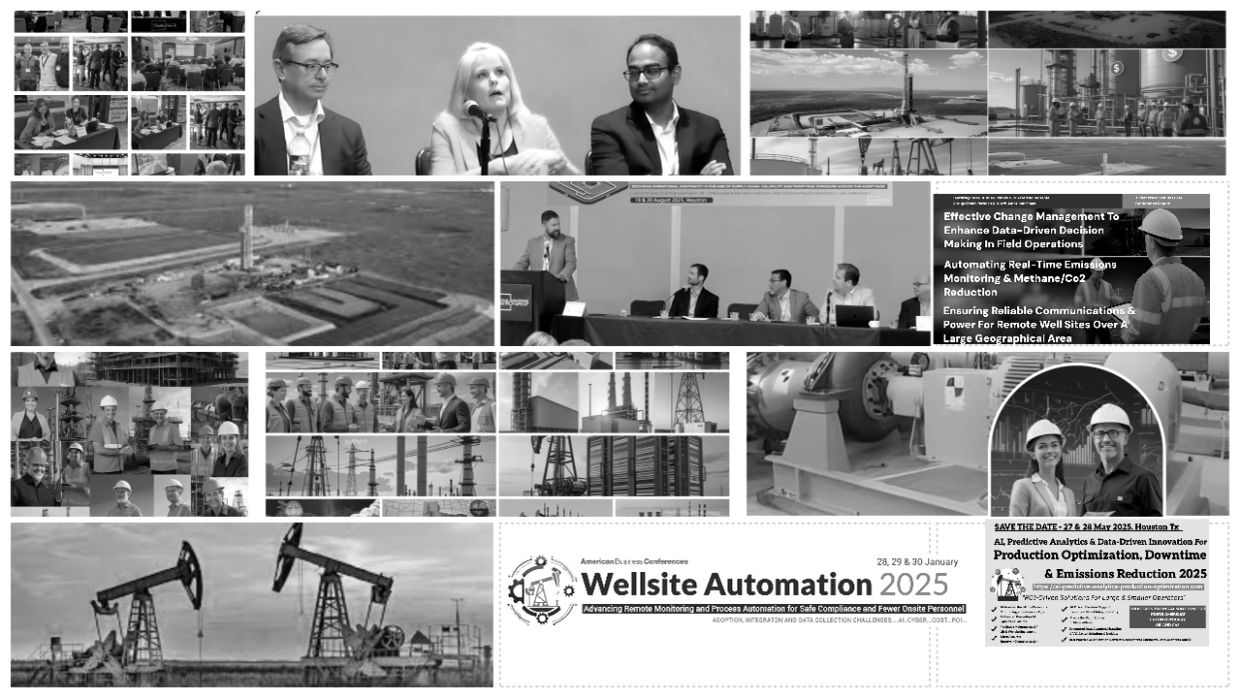
The 2026 Onshore Measurement & Allocation Conference marks an important evolution in the ongoing dialogue with the upstream industry, a conversation we've maintained for nearly two decades.
Through a series of events focused on Wellsite Automation, Onshore Facilities Optimization, Tight Oil Water Management, and Production Optimization, we've engaged closely with operators and technical teams as the onshore oil and gas sector has navigated through waves of automation, instrumentation, and data-driven strategies aimed at enhancing field performance.
Initially, discussions about Wellsite Automation concentrated on the automation of wellsites—covering topics like IoT, communications protocols, remote monitoring, and the practical integration of these technologies into field operations. Concurrently, our Wellsite Facilities events allowed us to delve deeper into the physical design and operation of production facilities.
Related initiatives included in-depth discussions on Tight Oil Water Management, which revolved around produced-water measurement, transfer, gathering, disposal, and reuse, while our Production Optimization initiatives emphasized how operators leverage field data, instrumentation, and operational insights to maximize production and asset performance.
Measurement has consistently been a theme throughout all four areas. Over time, however, the emphasis of the conversation has shifted from individual devices to broader questions regarding the trustworthiness of the resulting data and its reconciliation across the business. Field engineers frequently addressed issues related to meters, separators, tank measurement, and instrumentation, but the dialogue increasingly centered on simplifying facilities, enhancing instrumentation, automating processes, and bolstering technology reliability.
As the industry progressed, critical questions arose: How much confidence can we place in our numbers? Why do our measurements differ from those of others? What happens to this data once it leaves the field? Is the issue with the meter itself or elsewhere in the process? This evolution has become particularly evident in recent years with all of the mergers and takeaways and a need for greater standardization.
As a result, discussions have shifted from "What technology should we install?" to "Are we obtaining accurate information from our existing technology, and what actions should we take when discrepancies arise?" This insight is part of the rationale for transitioning the Wellsite Automation Conference to a biennial format. While there are still significant developments to discuss, the pace of technological change has eased since the initial phases of automation growth.
Measurement, however, continues to surface in broader business conversations, extending beyond just measurement engineering. Topics now encompass producer–midstream handoffs, allocation, produced water management, gas quality and BTU metrics, emissions management, commercial settlements, production accounting, finance, mergers and acquisitions, and asset valuation. This shift has sparked the inception of this inaugural Measurement & Allocation Conference.
The feedback indicates that while there are already highly technical metering forums playing important roles, the industry requires something distinct—a business conference dedicated to measurement rather than simply another convention focused on meters.
This is a conference that follows the journey of numbers from
FIELD → TRANSFER → RECONCILIATION → ALLOCATION → PRODUCTION ACCOUNTING → SETTLEMENT → REPORTING → FINANCIAL RECORD.
Crucially, it recognizes that resolving measurement challenges doesn’t solely require the purchase of new meters; solutions might include better instrumentation, testing, or sampling techniques, or even addressing issues at transfer points, configuration inconsistencies, differing cut-off times, or uncertainty regarding governing records.
This distinction lies at the core of the Onshore Measurement & Allocation Congress 2026, which is why this inaugural event feels like a continuation of the vital discussions the industry has been engaged in with us for years.