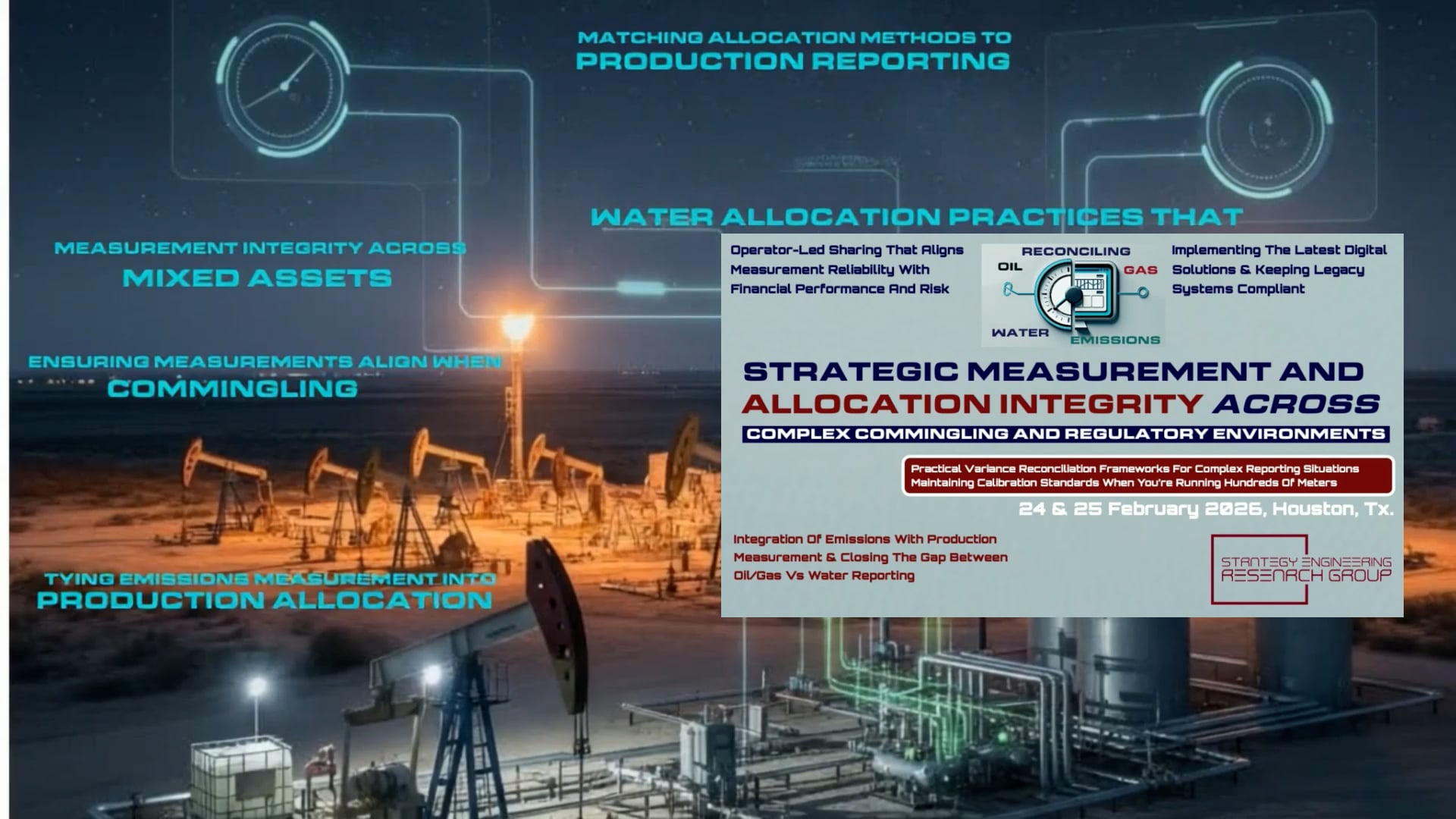
In 2026, measurement in upstream oil and gas is no longer a background technical function. It has become a strategic control point for commercial outcomes, regulatory exposure, and partner trust.
Volumes, losses, and variances now sit directly behind approvals, audits, royalty positions, and emissions credibility. As shared infrastructure, commingling, and centralised processing become more common, weaknesses in measurement and allocation propagate quickly—from the field into accounting, partner reporting, emissions submissions, and regulatory filings. What begins as technical ambiguity increasingly re-emerges later as contractual dispute, audit finding, or regulatory challenge.
As one Head of Measurement at a large Permian operator put it:
“Often, the financial impact is in the small errors you can’t explain. As these can easily build up…”
— Head of Measurement, Mid-Cap Permian Operator
This conference exists to address that change in accountability by sharing best practices on how measurement, allocation, and reporting systems are designed, governed, and defended in real-world operations.
Attendees will examine:
- Why specific commingling and allocation approaches succeed or fail under scrutiny
- How variance is explained, documented, and defended over time
- How different workflows perform across different asset and ownership configurations
- Where technical accuracy breaks down due to governance, documentation, or control gaps
- How operators adapt methods as regulatory expectations and review standards shift
Topics Include
- Detailed case studies on producing allocation math and evidence that stands up to regulators, partners, and royalty owners—without creating a permanent administrative burden
- Extended Q&A sessions on reconciling the three-stream reality of oil, gas, and water at scale
- Scenario-based roundtables on designing production, flare, fuel, and vent data systems that remain audit-defensible even as regulatory goalposts move
- Peer problem-solving discussions addressing interface pain, custody points, and royalty exposure across gathering and processing systems
By the end of the conference, attendees will be better positioned to:
- Improve alignment between production, emissions,flare, and water reporting
- Assess whether current measurement and allocation workflows are defensible under scrutiny
- Identify where reconciliation logic is most likely to be challenged
- Adapt workflows to different commingling and asset-sharing scenarios
- Reduce rework, resubmissions, and post-approval corrections
- Apply peer-tested best practices directly to live assets and regulatory submissions
- Build greater confidence in partner and royalty outcomes
- Surface weak points earlier—before they escalate into audit or regulatory challenge